
SEO in Chiang Mai: the digital nomad and lifestyle search market
Chiang Mai is the second-largest organic search market in Thailand, but the shape of its SERP is nothing like Bangkok. The competition density is materially lower, the English-language layer is unusually thick for a Thai city, and the buyer journey is heavily seasonal. Anyone planning an SEO strategy here has to understand that they are working in three overlapping markets at once: a Thai-language residential market, an English-language digital nomad and long-stay tourist market, and an inbound international tourism market that is still recovering its 2019 footprint.
The most distinctive feature of search behaviour in Chiang Mai is the digital nomad layer. Neighbourhoods like Nimmanhaemin and Santitham have produced a year-round English-speaking population that researches everything from coworking memberships to dental cleanings in English on Google. This is unusual. In most Thai cities, the English-language SERP is a thin tourist layer on top of a dominant Thai-language residential layer. In Chiang Mai it is a structural component of the market. Boutique cafés, coworking spaces, dental clinics, gyms, and even residential condos see a real share of their qualified search traffic arrive through English-language queries.
What's different about ranking in Chiang Mai vs Bangkok and Phuket
The single most important difference between Chiang Mai SEO and Bangkok SEO is competition density. Bangkok's SERP is structurally harder to break into because there are simply more well-resourced competitors per query. Chiang Mai's SERP is meaningfully thinner. A long-tail keyword in Chiang Mai that would take twelve to eighteen months to crack in Bangkok often ranks in three to six months. This compresses the time horizon of an SEO engagement and changes the budget conversation entirely. We routinely tell Chiang Mai clients that they can expect visible movement faster than a Bangkok counterpart at the same budget level.
The English-language SERP share in Chiang Mai is unusually high for a Thai city outside Phuket. Bangkok has more English-language search demand in raw volume, but as a share of the total local market, English plays a larger role in Chiang Mai. This is driven primarily by the digital nomad population and the residential expat layer, and it means the bilingual content strategy that we deploy by default in Chiang Mai is more decisive here than in most Thai cities. Phuket has more English-language share still, but Phuket's English market is a pure tourism layer; Chiang Mai's includes a year-round resident component, which changes the content brief.
How we approach Chiang Mai clients specifically
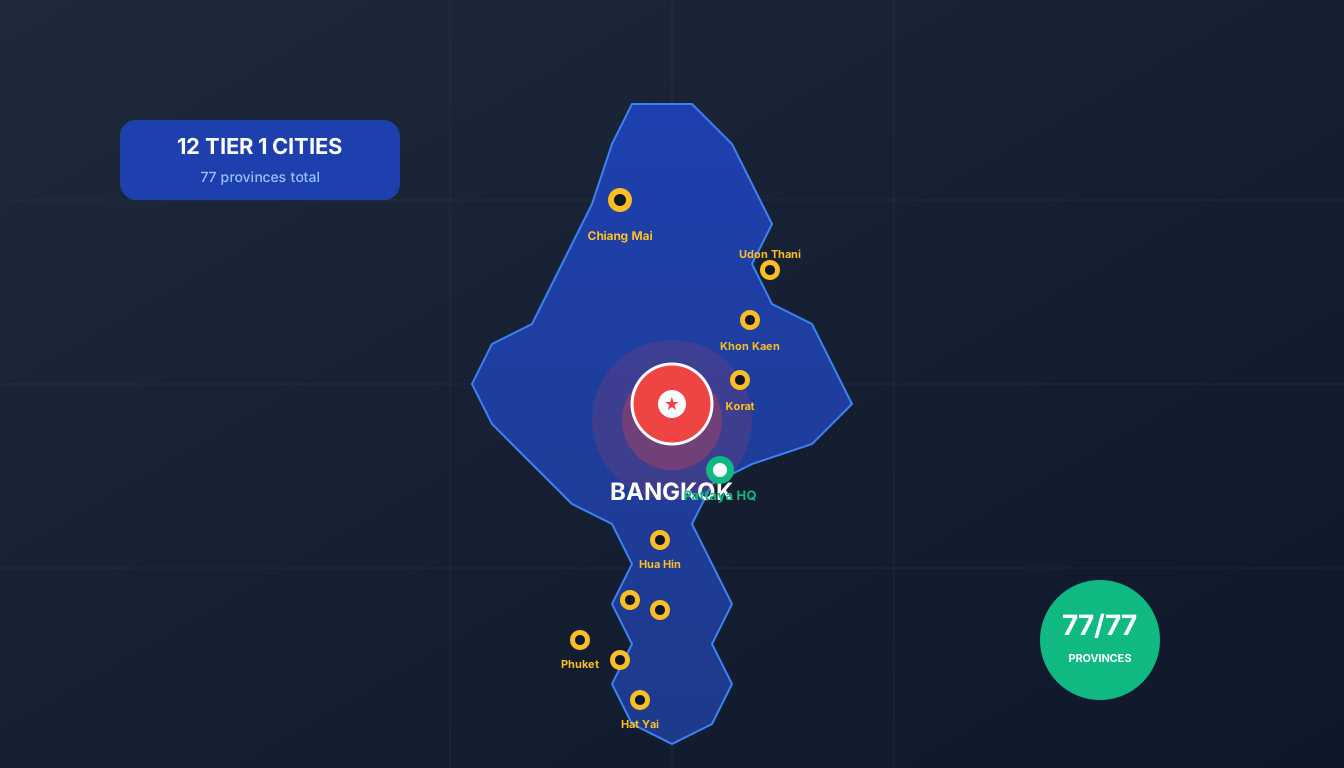
We are based in Pattaya, not Chiang Mai. The distance is roughly seven hundred kilometres, or one hour and fifteen minutes by direct flight from Bangkok. We are explicit with every prospective Chiang Mai client about this from the first conversation, because it shapes the engagement model in real ways. We do not pretend to have a Chiang Mai office. We do not pretend to be a local-first agency in a market where we are not local. We win the engagements where remote-plus-deep-craft is genuinely the right answer, and we lose — appropriately — the engagements where a daily-presence local agency is the better fit.
The practical engagement model for Chiang Mai clients is on-site visits quarterly rather than monthly. A typical engagement includes one to two in-person visits per quarter — a kickoff visit at the start, a mid-project review around month three, and a results-review visit at the six-month or annual mark depending on the contract length. Between visits, we run weekly remote standups by video, and we record Loom walkthroughs of every significant deliverable so the client can review at their own pace. This is not a compromise on quality. It is a deliberate choice that lets us invest the budget that would otherwise go into office overhead into actual SEO craft.
Our team is based in Pattaya. Chiang Mai engagements run as a mix of remote work and on-site visits — we are honest about the model rather than claiming a fake local office.